Restore
Treat contaminated organic matter and improve soil conditions.
Biological technologies and autonomous cultivation designed to recover land and multiply agricultural potential.
Microbiology, sensing and machine intelligence can work as one system.
Selected bacterial communities can support waste remediation, suppress hazardous biological loads and rebuild the conditions required for fertile soil.
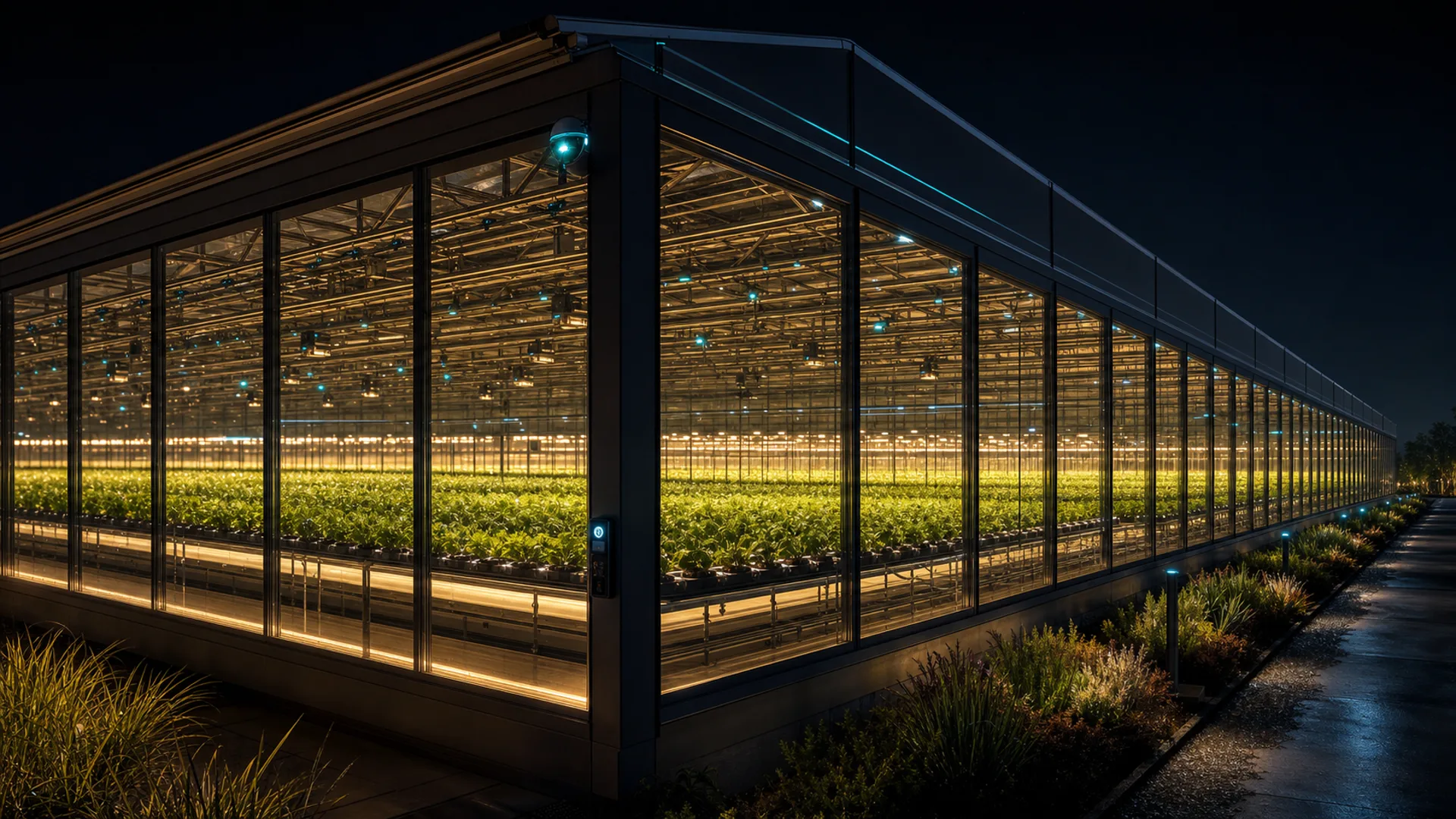
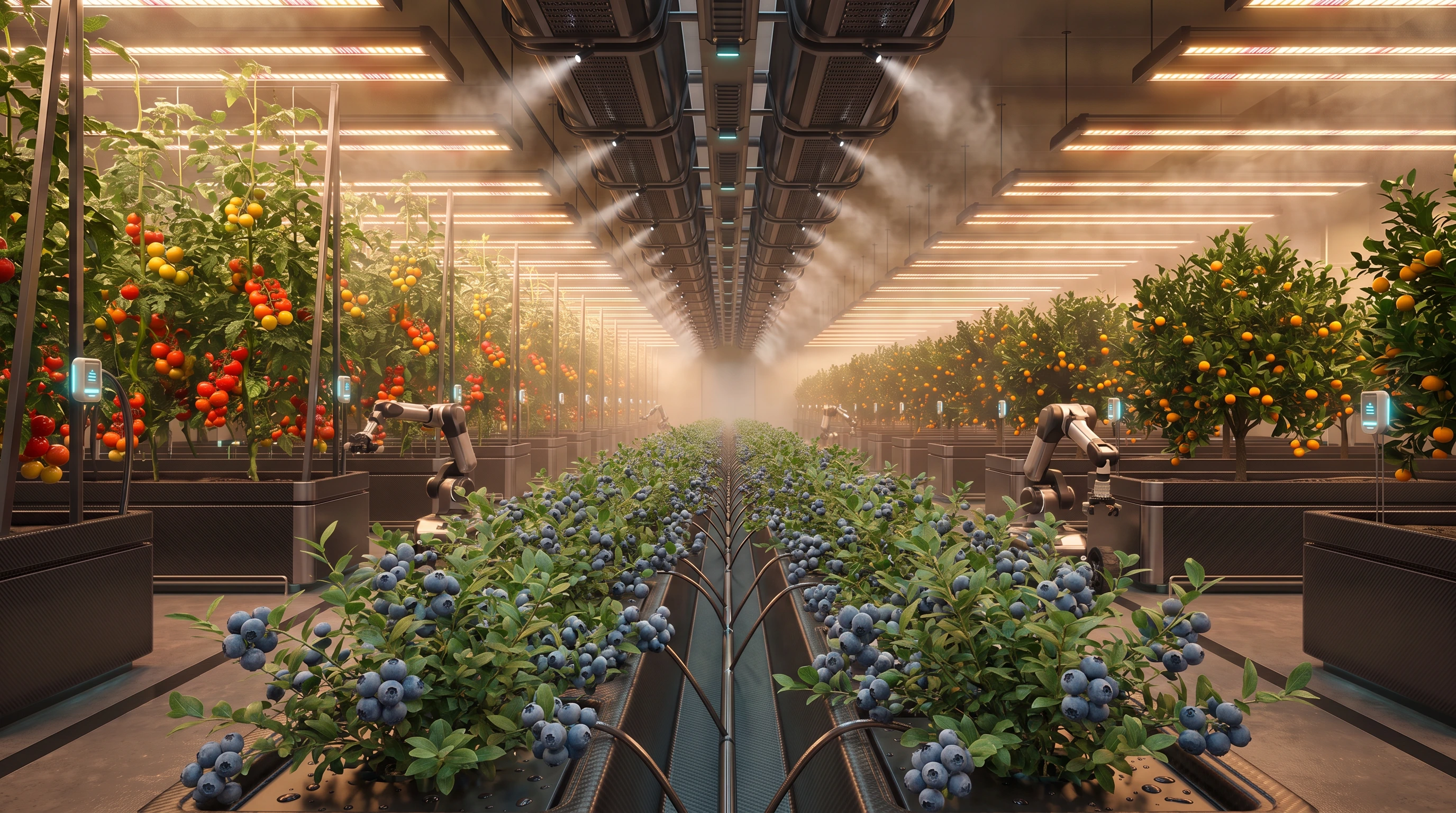
Inside smart greenhouses, sensor networks, cameras, computer vision and predictive models can monitor every growth cycle and guide cultivation with minimal human intervention.
Treat contaminated organic matter and improve soil conditions.
Continuous sensing reveals stress before it becomes visible.
Autonomous systems tune climate, nutrition and timing.
A single consortium of live microorganisms replaces chemical treatment across effluent and organic waste.
MS «Live Drop» is a universal, environmentally clean and safe preparation developed together with the Gabrichevsky Institute of Microbiology for effluent purification and the processing of organic waste, without disrupting existing technological processes. It functions as a universal bio-coagulant and flocculant.
The solution contains a broad range of aerobic and anaerobic, gram-positive and gram-negative bacteria and microscopic fungi — heterotrophic, oligotrophic, butyric, hydrocarbon-oxidising, oligonitrophilic, nitrifying, denitrifying and cellulolytic groups — together with a large volume of biologically active substances of microbial origin.
Core composition of MS-B «Live Drop» — principal genera and species
Cleans polluted natural, artificial and decorative waters — rivers, lakes, seas, ponds, pools and aquariums — resolving algal bloom and putrid odour.
Processes cattle, pig and poultry manure, crop residues, human waste, drilling and oil sludge, and sludge from treatment facilities.
Fine-dispersed surface irrigation rapidly removes odour at municipal treatment plants, poultry farms and pig complexes.
Treats household waste, sanitary-faecal effluent, cesspools and rural toilets.
Effective treatment and prophylaxis of wooden surfaces against rot and fungus.
Improves intestinal microflora and works as a feed additive, supporting faster live-weight gain and feed economy.
Complete fermentation of organics with suppressed gas formation.
For sludge maps and lagoons it is sufficient to introduce the preparation and provide mixing and aeration. Under microbial action the organic fraction ferments completely, gas formation is suppressed, and the hazard class of organic waste falls to class 5.
Waste such as sludge and effluent can also be processed without producing soil — fully decontaminated ecologically, then removed to a landfill, quarry or agricultural land without odour. Using the solution for effluent decontamination removes the need for any other preparations, including chemical agents, and reduces operating expenditure.
Application parameters
| Parameter | Value |
|---|---|
| Dilution for contaminated soil | 1 L solution : 100 L water — chlorine-free water |
| Post-treatment requirement | Mandatory cultivation of the surface to restore air permeability |
| Sludge lagoon regime | Introduce the preparation, then maintain mixing and aeration |
| Processing period | 21–40 days |
| Resulting hazard class | Reduced to class 5 |
| Typical use cases | Oil spills, oil sludge storage, landfills, treatment plant sludge |
Soil Microbiology
Microbial communities influence nutrient cycling, organic matter and the conditions around plant roots. Osher investigates how selected biological systems may support healthier soil processes in defined environments. Compatibility, stability and ecological context should guide every formulation pathway. The focus is on functional relationships rather than adding biology without a clear role.
Bioremediation
Biotechnology may offer targeted pathways for treating selected organic burdens and restoring productive conditions. We consider microbial and biochemical mechanisms alongside careful characterization of the site. Laboratory insight must be connected to staged evaluation before broader application is considered. This measured approach keeps environmental purpose aligned with scientific discipline.
Smart Greenhouses
Controlled environments create an opportunity to connect plant biology with precise operating data. Osher explores sensor networks, imaging and decision-support models that can reveal changes throughout the growth cycle. Automated adjustments should remain traceable and open to informed human review. The aim is cultivation that becomes more responsive as evidence accumulates.
Biological Formulation
A biological discovery must remain viable through preparation, storage, delivery and application. We focus on formulation questions that connect scientific function with practical use. Carriers, environmental conditions and interactions with existing systems all deserve structured evaluation. Product development succeeds when biological potential can be translated into a repeatable process.
Integrated Agritech
Agricultural biotechnology reaches further when it is connected to the way cultivation is actually managed. Osher considers systems in which biological inputs, environmental sensing and operational automation inform one another. Shared data can help teams understand when an intervention is relevant and how conditions respond. Integration turns separate technologies into a more coherent cultivation capability.
“The most advanced technology may be the one that helps nature work again.”Osher